



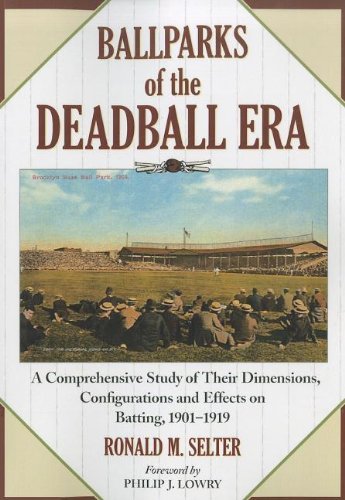
Ballparks of the Deadball Era: A Comprehensive Study of Their Dimensions, Configurations and Effects on Batting, 1901–1919

 4.4 (20 items)
 Limited Time Sale
US$5.23 cheaper than the new price!!
Free cash-on-delivery fees for purchases over $99
Product details
| Management number | 233351792 | Release Date | 2026/06/27 | List Price | US$3.48 | Model Number | 233351792 | ||
|---|---|---|---|---|---|---|---|---|---|
| Category | |||||||||
While most serious fans know that the Deadball Era was characterized by low scoring, aggressive baserunning, and strong pitching, few understand the extent to which ballparks determined the style of play. As it turns out, the general absence of standardization and the ever-changing dimensions, configurations, and ground rules had a profound effect on the game, as offensive production would rise and fall, sometimes dramatically, from year to year. Especially in the early years of the American League, home teams enjoyed an unprecedented advantage over visiting clubs. The 1901 Orioles are a case in point, as the club batted an astounding .325 at Oriole Park IV—some 60 points above their road average and 54 points better than visitors to the park. Organized by major league city, this comprehensive study of Deadball parks and park effects provides fact-filled, data-heavy commentary on all 34 ballparks used by the American and National Leagues from 1901 through 1919. Illustrations and historical photos are included, along with a foreword by Philip J. Lowry and a final chapter that offers an assessment of the overall impact of parks on the era. Read more
| ASIN | B003C1QSOQ |
|---|---|
| XRay | Not Enabled |
| ISBN13 | 978-0786452644 |
| Edition | 1st |
| Language | English |
| File size | 2.8 MB |
| Page Flip | Not Enabled |
| Publisher | McFarland |
| Word Wise | Enabled |
| Print length | 198 pages |
| Accessibility | Learn more |
| Publication date | December 11, 2009 |
| Enhanced typesetting | Not Enabled |
Bestseller ranking
Air Filter Accessories



Customers who viewed this product also viewed
History


Correction of product information
If you notice any omissions or errors in the product information on this page, please use the correction request form below.
Correction Request Form